Standard One
Documented Provenance
Every artifact is traced through family record, dealer ledger or regional workshop tradition before it enters the registry.
Signature Heritage & Classic American Standards · Camden, Maine

Heritage Spotlight
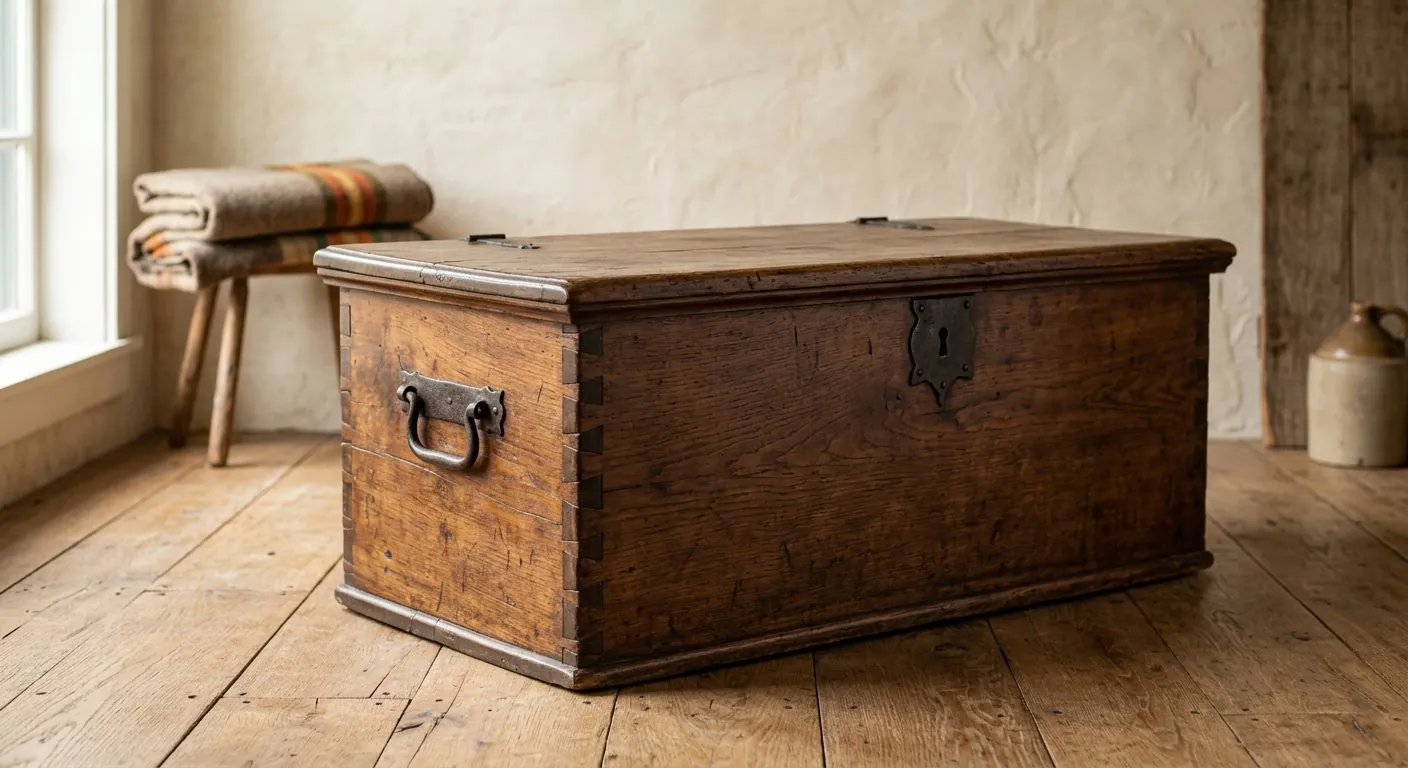
Early American cabinetmakers worked without a hardware store down the road. A chest had to survive a century of Maine winters, so the joinery answered for itself: hand-cut dovetails spaced by eye, drawer bottoms floated in grooves, and a backboard of white pine that could move with the seasons.
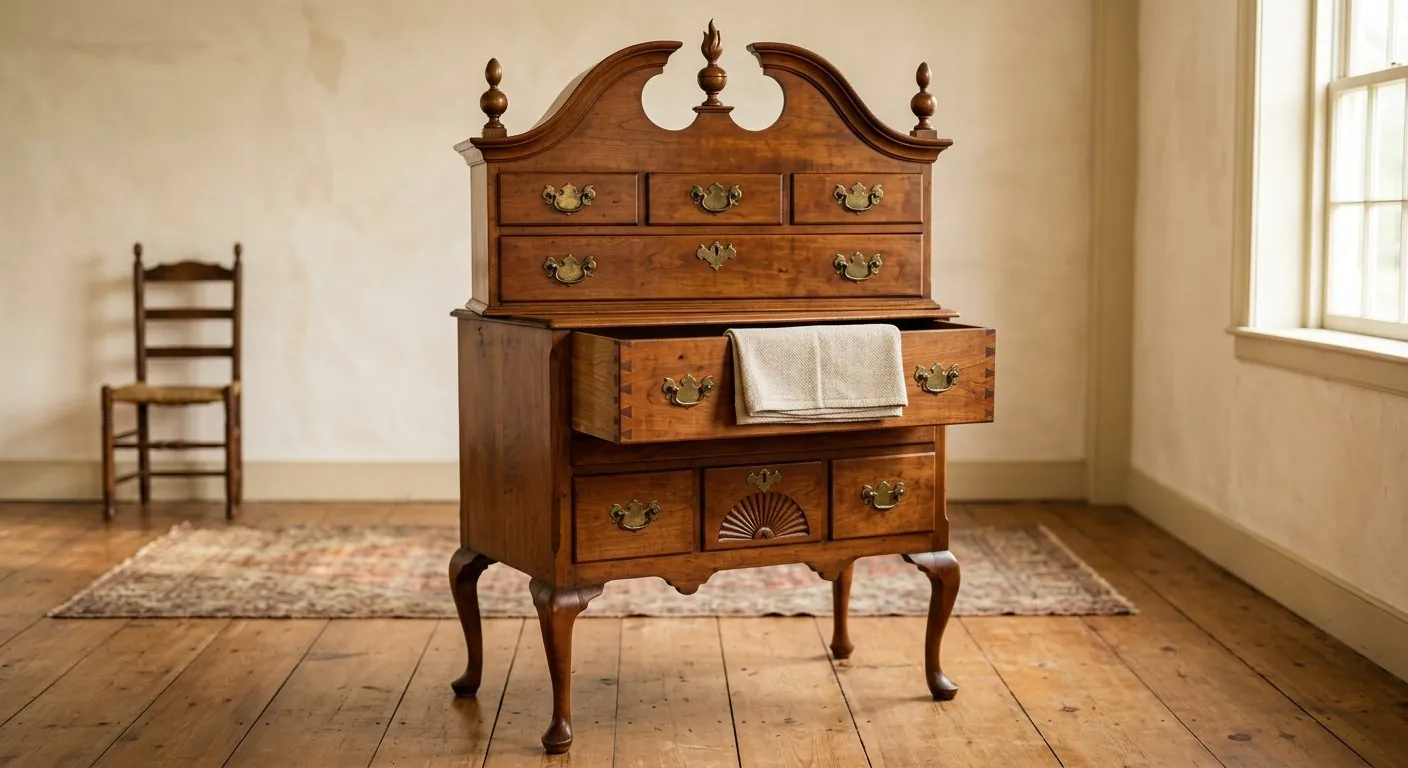
That discipline is what collectors of American antiques look for first. Not the label, which is often gone, but the decisions. A highboy that has kept its original brasses, its graduated drawer sequence and its bracket feet has survived every incentive to alter it — and that survival is the standard we document.
A finish is not decoration. It is the record of every hand that ever opened the drawer. Registry Note · Case Furniture
Our entries favor household artifacts that stayed in use: ironstone pitchers filled at the pump, tin coffee grinders bolted to a pantry wall, butter churns worked until the staves polished themselves. Use is not damage here. Use is authentication.
Signature Artifact Registry
These are the four households every serious American collection eventually circles: the walnut chest, the ironstone shelf, the cooperating kitchen and the pressed glass cupboard. Each holds a different lesson in material honesty.
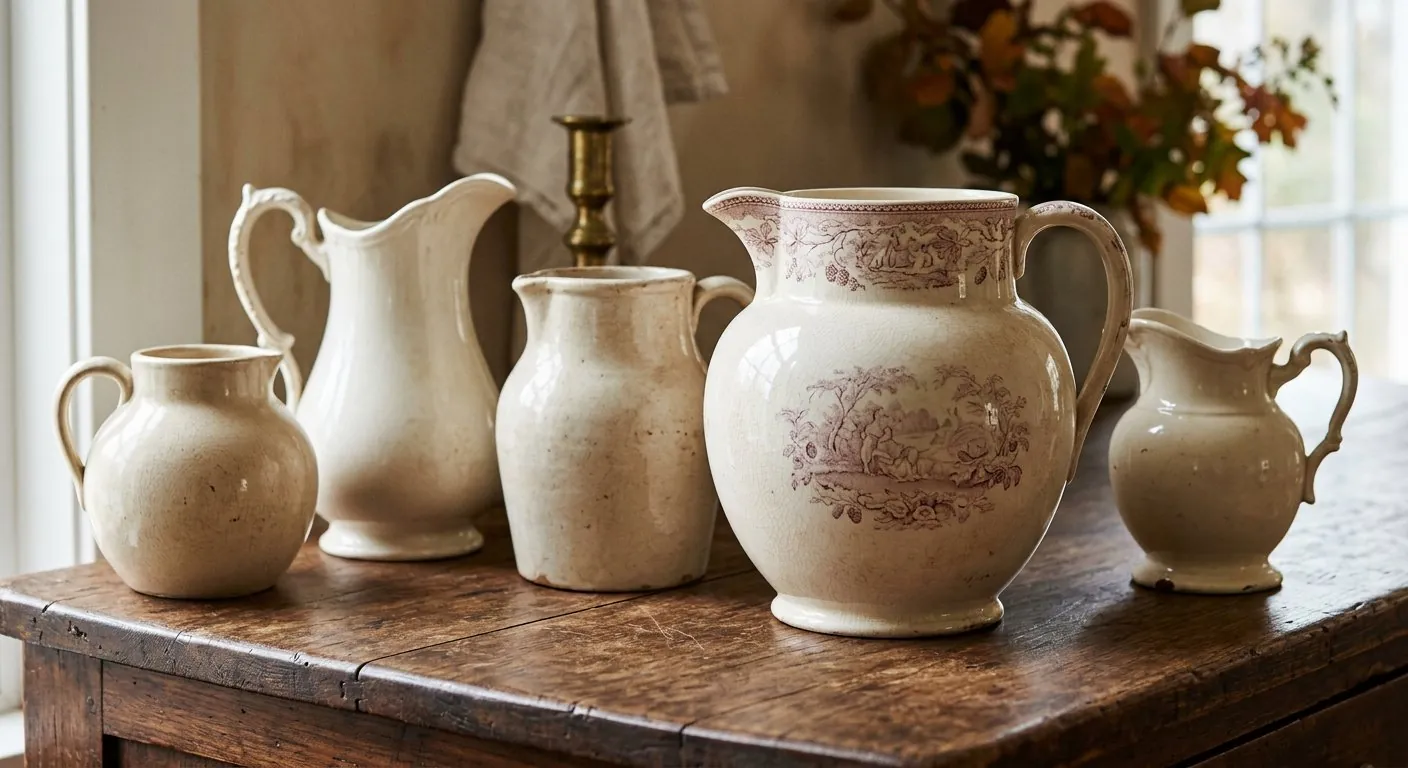
Dense vitrified earthenware in cream and soft white, often banded with mulberry transferware. Look for a clear ring when tapped and glaze crazing that stays on the surface rather than into the body.
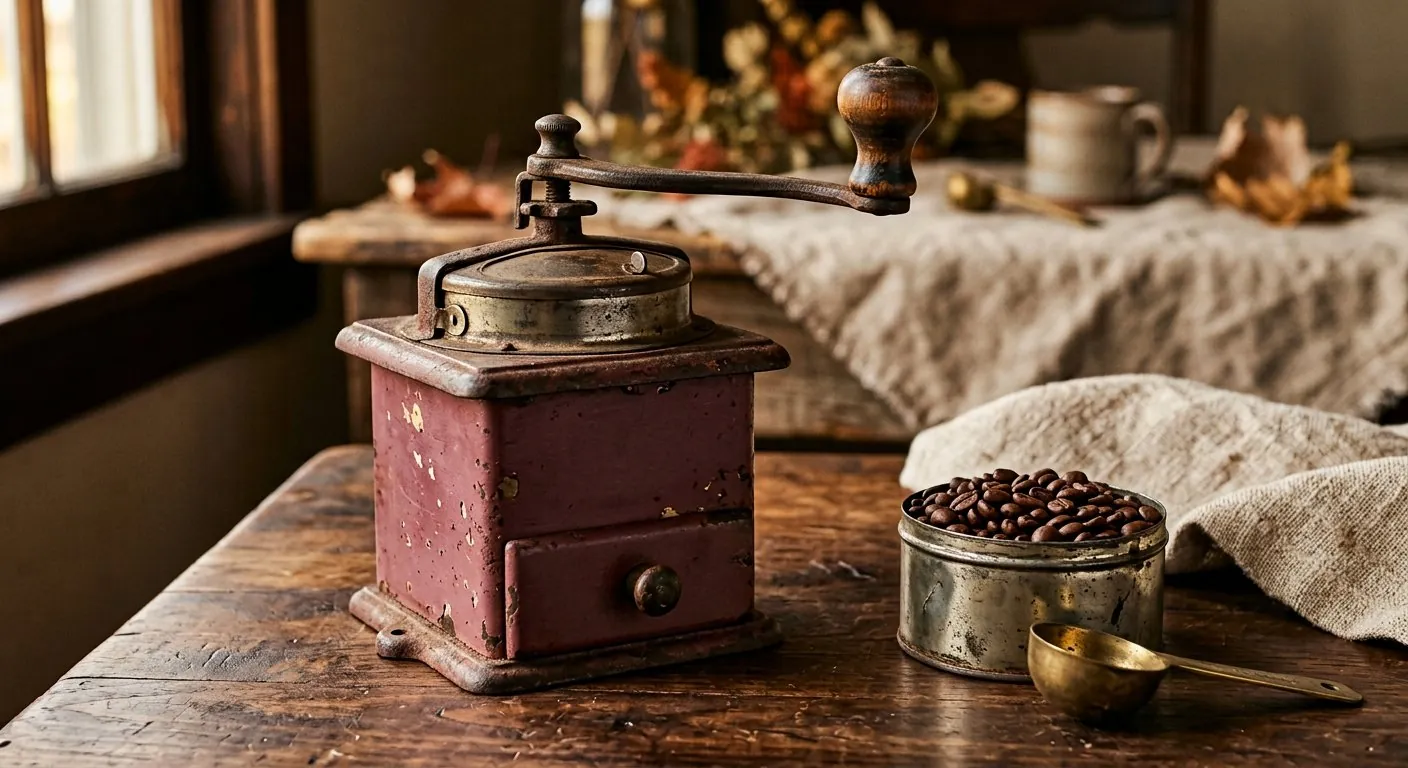
Hand-cranked mills, scoops, dippers and japanned boxes in mulberry and ochre paint. Original paint is the deciding factor; a repainted body loses most of its documentary value.
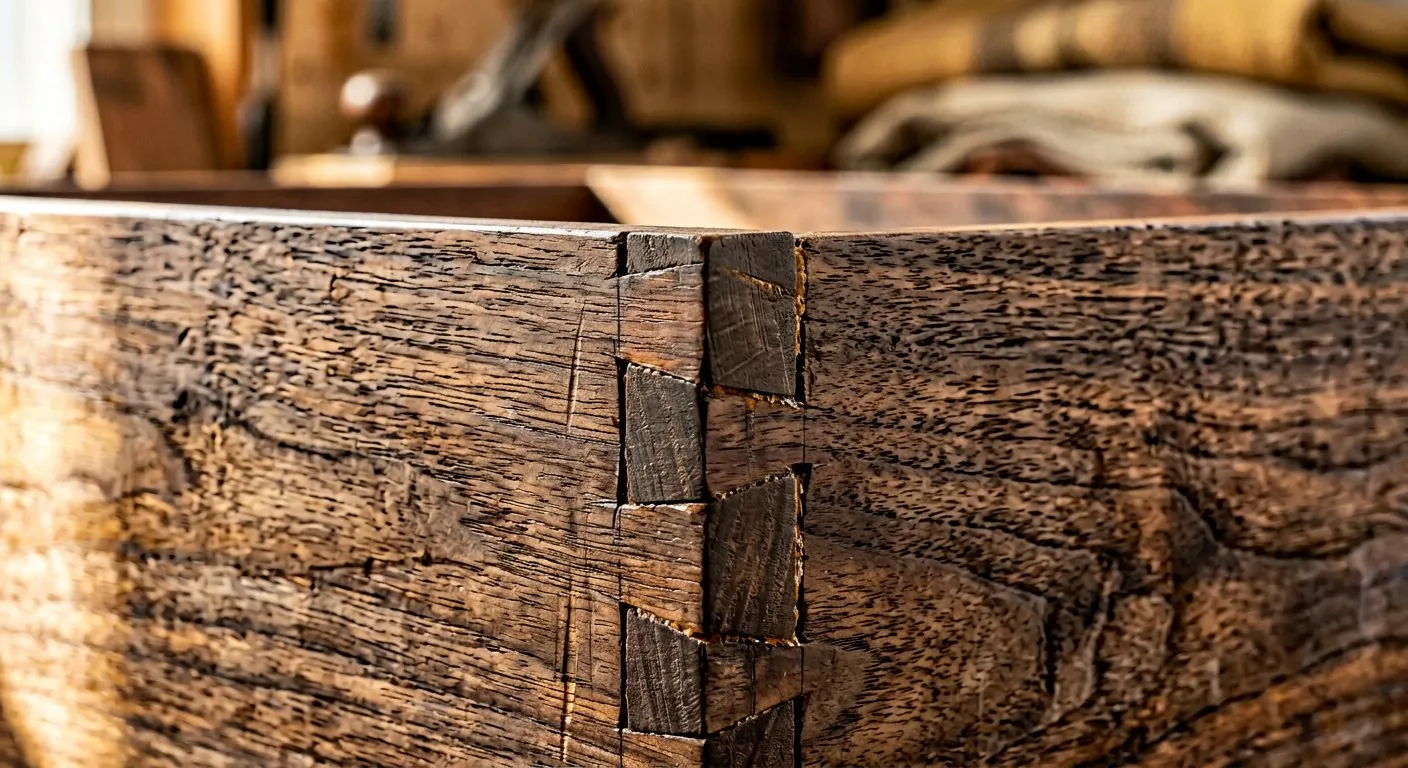
Pins and tails cut by hand and fitted without filler. Wide, uneven spacing signals an earlier shop; tight, uniform spacing points to steam-powered production after the 1860s.
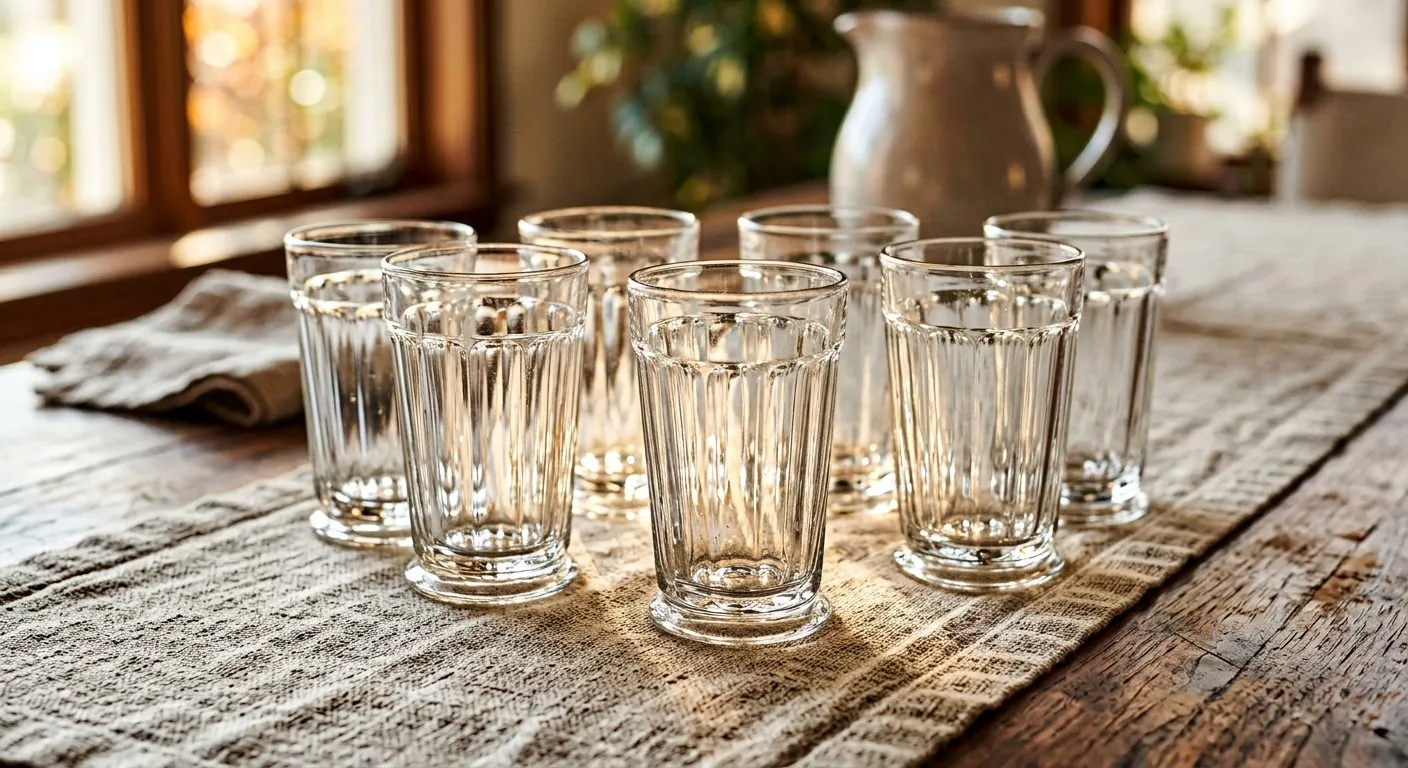
Ashburton, loop and thumbprint patterns pressed in brilliant clear glass, with interior bubbles and mold seams that confirm period manufacture rather than later reproduction.
Specification Ledger
Filter the ledger by artifact class, then read the documented attributes for each entry — era window, primary and secondary woods, joinery method, surface treatment and condition tier.
Spec AL-0184
Six-board chest with a hinged lid, forged iron lock plate and a single drawer set into the base rail.
Spec AL-0207
Heavy cream-glazed pitcher, molded spout and applied handle, with a transfer-printed mulberry band at the shoulder.
Spec AL-0231
Wall-mounted mill with a cast iron hopper, japanned mulberry tin body and a turned hardwood crank.
Spec AL-0256
Set of six clear pressed tumblers with period tooling marks and a matched depth of pattern across the set.
Spec AL-0278
Coopered heartland churn with brass hoops, matched dasher and a fitted lid turned from the same stock.
Spec AL-0301
Two-part highboy with graduated drawers, original brass bail pulls and bracket feet on a pine secondary frame.
Showing 6 of 6 registry entries — All categories
Regional Sourcing
American household artifacts read differently by region because the materials did. What a workshop could cut, coop or fire locally shaped the object that survived.
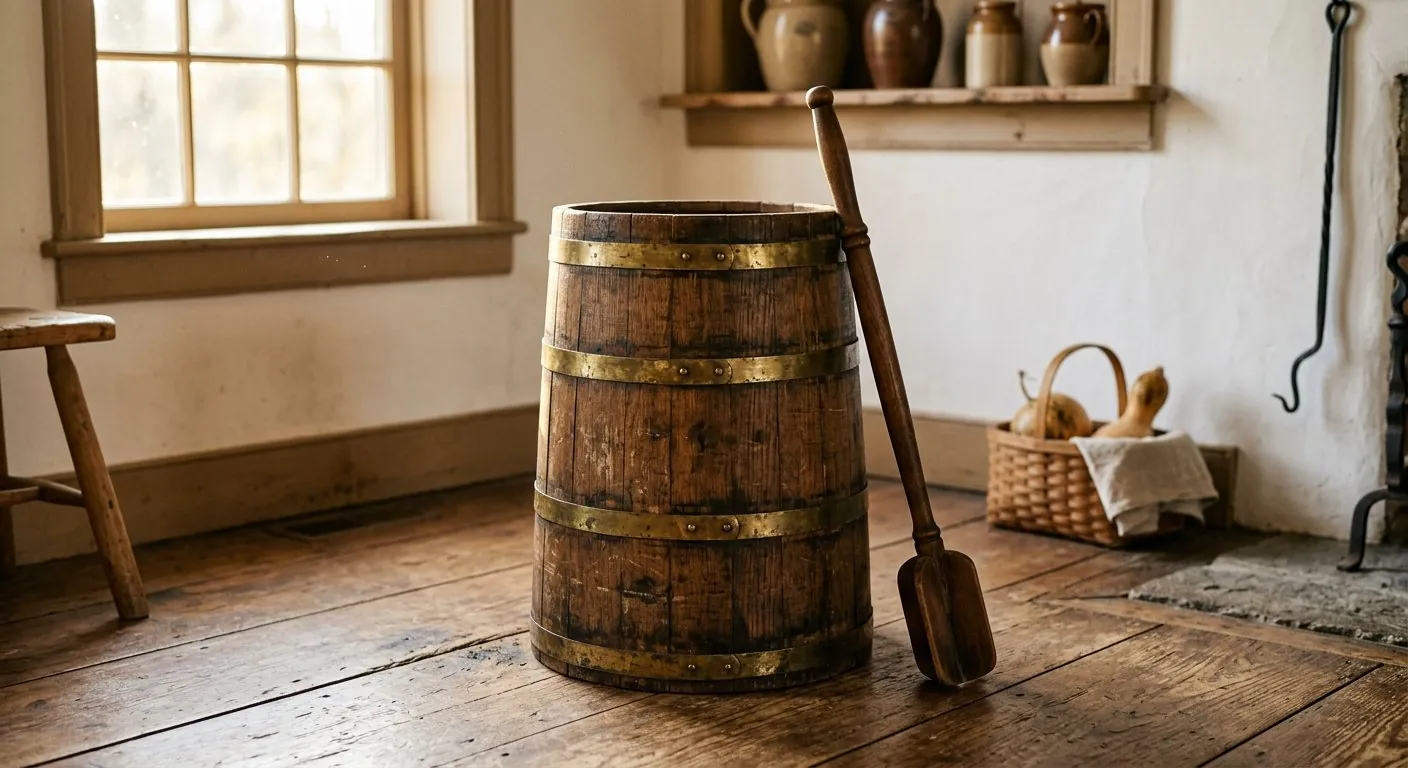
Ohio Valley and upper Midwest farmsteads kept churns, firkins and salt crocks in daily rotation. Brass-hooped pine tells you the dairy was working, not decorative.
Cherry and maple highboys, tall clocks and chests on frame-and-panel construction. Look for white pine secondaries and bracket feet that were built to be repaired, not replaced.
Fir and cedar kitchen furniture, painted cottage boxes and utilitarian shelving from coastal towns, where a marine finish often outlived the original paint beneath it.
Hand-coiled pottery, tinwork and low pine benches that answer to a drier climate. Crack lines and lid fits are read against regional humidity before condition is graded.
Blanket chests, tavern tables and dough bins in black walnut, cut nails and forged iron. The Mid-Atlantic is where the American chest form was most widely standardized.
Bespoke Configurator
Set your era, artifact class, surface approach and condition tolerance. The brief updates as you work and can be copied for a dealer conversation or a written appraisal request.
Step 01
Step 02
Step 03
Step 04
ATTIC & LEDGER — CUSTOM SELECTION
Collector Questions
We read construction before surface. Saw marks, dovetail spacing, nail type, plane marks and secondary woods will usually place a household artifact inside a thirty-year window even when no label survives.
No. Original shellac, milk paint and oxidation carry both value and evidence. Conservation stabilizes a finish and cleans gently; it does not remove the history a surface records.
Ironstone is a dense, vitrified body fired to resist chipping and staining. It rings clearly when tapped, shows a bright glaze over a heavier wall, and was made in America as durable family tableware.
Each entry is graded across surface integrity, structural soundness and completeness of original parts. Tiers run from museum grade through collector grade to study grade and restoration candidate.